
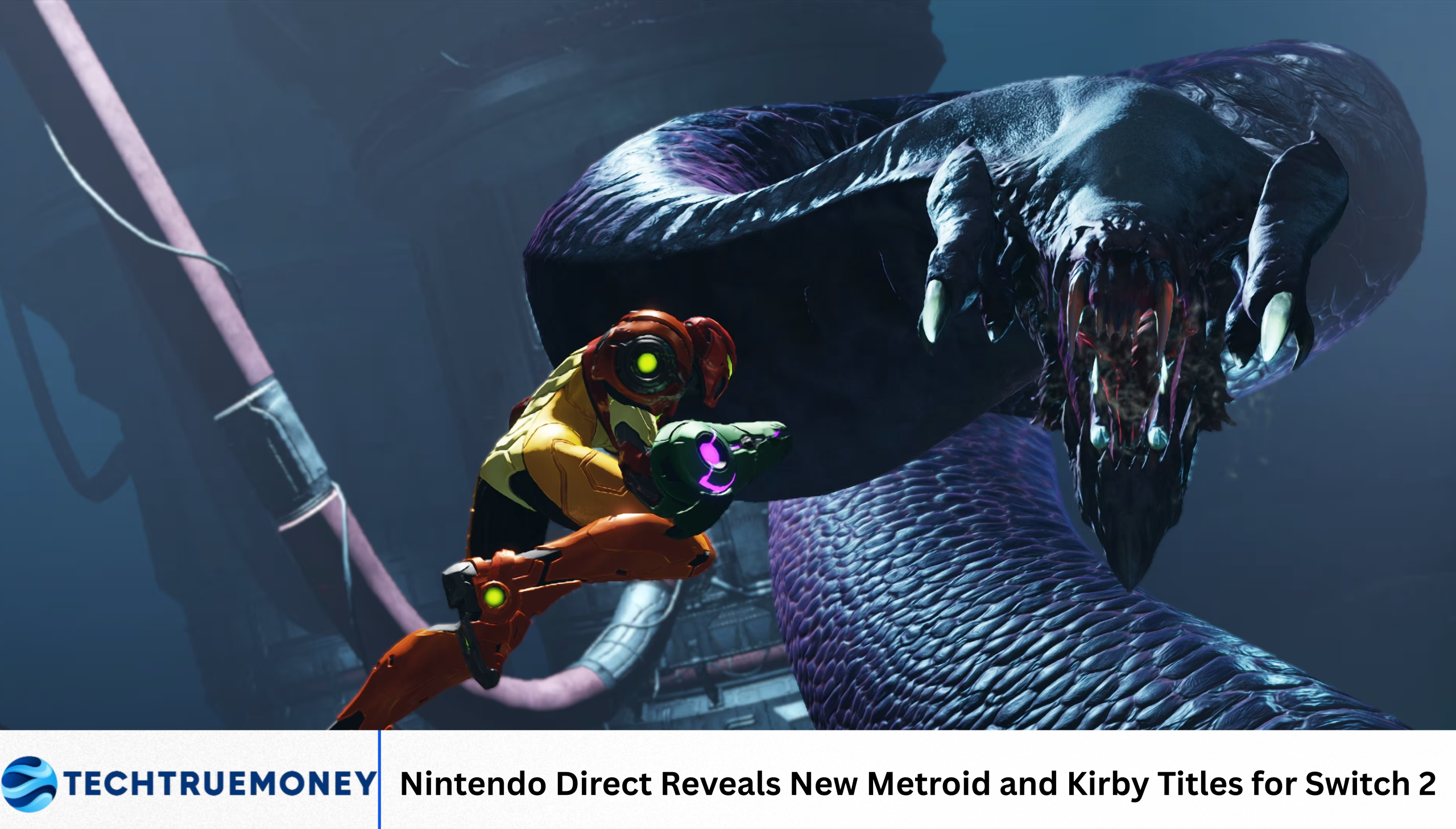
Nintendo continues to expand the Switch 2 game library with new announcements involving some of its most recognizable franchises. A recent Nintendo Direct presentation highlighted upcoming projects connected to Metroid and Kirby, giving players additional reasons to watch the platform’s growing lineup.
Both franchises have long histories within Nintendo’s gaming catalog, but they offer very different experiences. Metroid is known for exploration, atmospheric environments, science-fiction settings, and combat, while Kirby is associated with colorful worlds, accessible gameplay, and creative abilities.
Switch 2 Expands Its Game Library
The arrival of a new Nintendo console typically brings renewed attention to established franchises.
Switch 2 provides developers with updated hardware capabilities that can support higher-resolution visuals, more detailed environments, improved performance, and new gameplay possibilities.
For Nintendo, major first-party franchises are an important part of that strategy.
Metroid and Kirby appeal to different parts of the Nintendo audience, making them useful additions to a broader software lineup.
Players who prefer exploration and science-fiction adventures may be drawn to Metroid, while families and players looking for colorful platforming experiences may be more interested in Kirby.
Metroid Continues Its Science-Fiction Legacy
The Metroid franchise has been one of Nintendo’s most recognizable action-adventure series for decades.
The games generally place players in environments that encourage exploration, discovery, combat, and problem-solving.
A major part of the series’ identity comes from allowing players to gradually gain new abilities and use them to reach previously inaccessible areas.
This approach creates a sense of progression that is closely connected to exploration.
The franchise also has a distinctive atmosphere. Rather than relying entirely on fast-paced action, Metroid games often combine combat with environmental storytelling and isolated locations.
New Metroid Content Brings Attention to Switch 2
The latest Nintendo announcements add new interest to Metroid’s future on the platform.
Nintendo has been expanding the series as part of its broader strategy for the Switch 2 generation, giving fans opportunities to experience the franchise with updated hardware.
Improved hardware can benefit a series such as Metroid by supporting more detailed environments, smoother performance, and greater visual complexity.
However, hardware improvements are only one part of the experience. Fans also expect new Metroid releases to maintain the exploration and progression systems that have defined the franchise.
Kirby Takes a Different Approach
Kirby represents another major side of Nintendo’s game portfolio.
The character is known for a colorful visual style and gameplay that is generally easier to approach than many action-heavy titles.
Kirby’s ability to copy or absorb enemies and use their abilities has become one of the franchise’s defining mechanics.
This system allows developers to create varied gameplay while maintaining a relatively simple control structure.
Kirby games often combine platforming with puzzles, exploration, combat, and creative transformations.
Why Kirby Remains Important
Kirby’s broad appeal makes the franchise useful for Nintendo’s software lineup.
The games can attract younger players while also offering enough creativity and variety for longtime Nintendo fans.
Nintendo has repeatedly experimented with the series through different gameplay formats, multiplayer options, and visual styles.
The latest Switch 2 developments continue this tradition by giving Kirby another role in the platform’s growing collection of games.
Different Audiences, One Platform
The combination of Metroid and Kirby demonstrates the variety Nintendo is trying to maintain.
A console needs games that appeal to different audiences, from experienced players looking for deeper adventures to families seeking accessible entertainment.
Metroid can provide a more atmospheric and exploration-focused experience, while Kirby can offer colorful platforming and approachable gameplay.
This variety can help Nintendo maintain interest across different age groups and gaming preferences.
Switch 2 Hardware Creates New Possibilities
New hardware gives developers additional technical options.
Developers can create more detailed environments, improve lighting and visual effects, increase the amount of detail on characters, and potentially deliver smoother performance.
For action-adventure games, stable performance can contribute to a more responsive experience.
For colorful platformers, improved resolution and visual effects can make environments and character animations more detailed.
The impact of new hardware will ultimately depend on how developers use it rather than simply on technical specifications.
Nintendo’s First-Party Strategy
Nintendo has historically relied heavily on its first-party franchises.
Characters and series such as Mario, Zelda, Pokémon, Animal Crossing, Metroid, and Kirby have helped establish the company’s identity within the gaming industry.
New hardware gives Nintendo an opportunity to introduce these franchises to existing fans while also reaching new players.
The challenge is maintaining familiarity without making every new release feel identical.
Players generally expect established franchises to retain recognizable elements while introducing new ideas.
Metroid Appeals to Longtime Players
The Metroid franchise has developed a dedicated audience over several generations of Nintendo hardware.
Longtime fans often pay close attention to new announcements because they want to know how Nintendo plans to evolve the series.
The franchise’s exploration-focused design gives developers room to experiment with environments, abilities, enemies, and storytelling.
New hardware could provide additional opportunities for more detailed worlds and technical improvements.
However, maintaining the series’ distinctive atmosphere will likely remain important for players who have followed Metroid for many years.
Kirby Can Strengthen Family-Friendly Gaming
Kirby also plays an important role in Nintendo’s family-friendly software lineup.
The character’s recognizable design and approachable gameplay make Kirby titles accessible to a broad range of players.
At the same time, Nintendo can introduce more advanced challenges for experienced players who want to explore everything a game offers.
This balance allows Kirby to occupy a flexible position within Nintendo’s portfolio.
The franchise can serve as an entry point for younger players while remaining familiar to longtime fans.
Multiplayer Features Can Expand the Experience
Multiplayer has become increasingly important in modern Nintendo games.
Cooperative gameplay can make platformers and adventure titles more appealing to families and groups of friends.
Kirby has a history of incorporating multiplayer elements, making the franchise particularly suited to cooperative experiences.
Metroid traditionally focuses more heavily on single-player exploration, although Nintendo has explored multiplayer concepts within the broader franchise.
The continued development of online and local multiplayer features could provide additional ways for Switch 2 owners to use their consoles.
The Importance of Release Timing
Game announcements create excitement, but release timing also matters.
Nintendo needs to maintain a steady flow of software throughout a console’s life cycle.
Releasing major titles too close together can create competition between Nintendo’s own games, while long gaps can leave players waiting for new first-party experiences.
Metroid and Kirby can contribute to different parts of the release schedule depending on when their respective projects arrive.
This broader strategy helps maintain attention around the console over a longer period.
Digital and Physical Gaming
Modern Nintendo players have multiple ways to purchase games.
Physical editions remain important to collectors and consumers who prefer owning a cartridge or boxed product. Digital downloads provide convenience and allow players to begin playing without waiting for physical delivery.
Large first-party releases often receive attention from both groups.
Nintendo’s approach to Switch 2 software will therefore involve both physical retail distribution and digital storefront availability.
This gives consumers flexibility while also allowing Nintendo to reach players through multiple channels.
Switch 2 and the Competitive Console Market
Nintendo operates in a competitive global gaming industry that also includes Sony and Microsoft.
The Switch 2 follows a different strategy from traditional home consoles by continuing Nintendo’s emphasis on flexible and portable gaming.
First-party franchises are an important part of that strategy.
Games that cannot be experienced in exactly the same way on competing platforms can provide additional reasons for consumers to choose Nintendo hardware.
Metroid and Kirby therefore have significance beyond individual releases because they contribute to the identity of the overall platform.
Fans Are Watching for More Details
Initial announcements typically provide only part of the information players want.
Fans often look for additional details about gameplay mechanics, release dates, editions, multiplayer features, technical performance, and downloadable content.
Nintendo frequently provides more information closer to launch.
This allows the company to build anticipation over time while giving developers additional opportunities to demonstrate new features.
For players, the period between announcement and release can therefore involve continued speculation and official updates.
What These Games Mean for Switch 2
The addition of new Metroid and Kirby projects strengthens the variety of Nintendo’s software lineup.
Metroid can appeal to players looking for exploration and science-fiction adventure, while Kirby provides a different style of colorful platforming and character-driven gameplay.
Together, they demonstrate how Nintendo can use multiple established franchises to serve different audiences.
The success of each game will ultimately depend on factors such as gameplay quality, technical performance, content, pricing, and how well each title meets player expectations.
The Future of Nintendo Franchises
Nintendo’s established franchises continue to evolve as hardware changes.
New consoles create opportunities to revisit familiar characters with improved technology while introducing new gameplay systems.
The company faces the challenge of balancing innovation with the expectations of longtime fans.
Players generally want familiar elements to remain recognizable, but they also expect new releases to offer meaningful reasons to play.
Metroid and Kirby provide two different examples of how Nintendo can approach that balance.
Frequently Asked Questions
What did Nintendo reveal about Metroid and Kirby?
Nintendo’s latest Direct presentation highlighted new developments involving the Metroid and Kirby franchises for Switch 2, adding to the platform’s expanding software lineup.
Why are Metroid games important to Nintendo?
Metroid is one of Nintendo’s established action-adventure franchises and is known for exploration, science-fiction environments, combat, and progression through new abilities.
What makes Kirby games different?
Kirby games typically combine colorful platforming with accessible controls, creative abilities, exploration, and combat. The franchise is designed to appeal to a broad range of players.
Will Switch 2 improve Nintendo games technically?
The newer hardware provides developers with additional technical capabilities, including opportunities for improved visual detail and performance. The actual benefits depend on how individual games use the hardware.
Why are first-party games important for Switch 2?
Nintendo’s first-party franchises help give the platform a distinctive software lineup. Established series can attract existing fans while also introducing new players to Nintendo’s characters and game worlds.
Conclusion
Nintendo’s latest Direct announcements highlight the continued expansion of the Switch 2 software lineup, with Metroid and Kirby representing two very different sides of the company’s gaming portfolio.
Metroid brings its established focus on exploration, science-fiction environments, combat, and progression, while Kirby continues to offer colorful and accessible platforming experiences. Both franchises have long histories with Nintendo and can contribute to the variety available on the new console.